
Guides › Sporting clays targets explained
Sporting clays targets explained: standard, midi, mini, battue and rabbit
By Clays Finder  Support Clays Finder
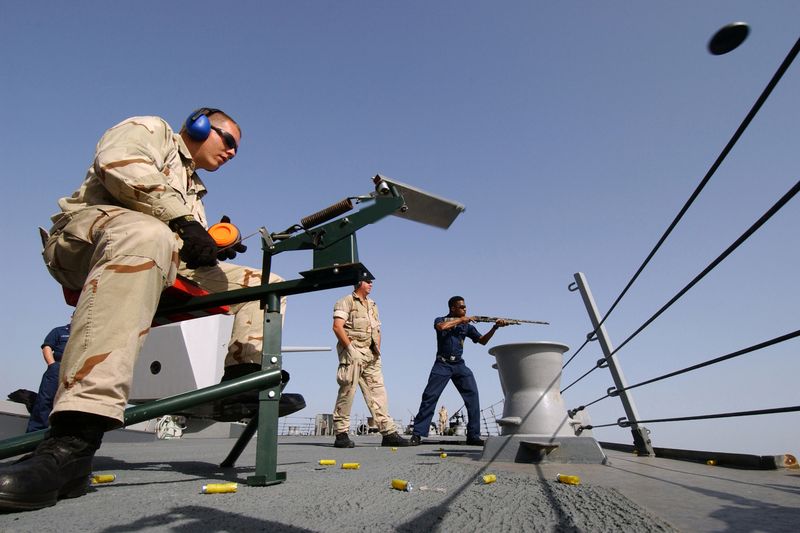
Sporting clays uses several kinds of clay targets, not just the familiar one from trap and skeet. The standard target is 108 mm across and is the one you'll see most. The "specialty" targets are the midi (90 mm), the mini (60 mm), the rabbit and the battue. Some courses also use a 70 mm target and flash targets. Each one looks or flies differently, which is a big part of why no two sporting clays courses feel the same.
This guide uses the NSCA (National Sporting Clays Association) rule book for sizes and definitions, and an NRA journal article and a target manufacturer's own pages for how the targets fly.
At a glance
| Target | Size | What's different about it |
|---|---|---|
| Standard | 108 mm | The most common target. It's the same type used in skeet and trap. |
| International | 110 mm | The target used in International skeet and bunker trap. |
| Midi | 90 mm | Smaller, so it can look farther away than it is. |
| 70 mm | 70 mm | A small domed target. |
| Mini | 60 mm | The smallest. Very fast off the trap, but slows quickly. |
| Rabbit | 108 mm | Sturdy, built to roll and bounce along the ground. |
| Battue | 108 mm | Very thin and flat. It can turn over and drop quickly. |
| Flash | 108 or 110 mm | Has colored dust that makes a puff when it's hit. |
Sizes are from the NSCA's list of approved targets.
The standard target
The NSCA calls the 108 mm target the "standard" target. Manufacturers make a trap/skeet grade and a sporting clays grade, built to handle being thrown at higher speeds, and both are permitted. It's a domed disc, and it's the one most courses throw most often.
Midi, 70 mm and mini: small domed targets
These are scaled-down versions of the standard dome. The NSCA lists the 90 mm target as the "midi," the 60 mm as the "mini," and a 70 mm target.
- Why they're tricky. A small target can look like a standard target that's farther away. An NRA journal article explains that midis are used to create the illusion of distance, and that if a shooter mistakes a 90 for a standard, they may apply too much lead and miss in front.
- Midi. One manufacturer says its 90 mm midi is faster than a standard target early in its flight and keeps its path better, because it's the most aerodynamic of the domed targets.
- Mini. The same NRA journal piece says 60 mm targets come off the trap very fast but lose speed quickly, and fly less predictably. It adds that the 70 mm target has largely taken the 60's place on many courses since it flies more consistently. That article was published in March 2021, so what you'll see today depends on the course.
Rabbit
The NSCA describes the rabbit target as robust, built to withstand bouncing along the ground, and 108 mm in diameter. The NRA journal article says it has the same diameter as a standard target but is much thicker and has no dome, so it can stand up to being rolled at high speed across the ground. The NSCA says its courses are designed to simulate hunting of ducks, pheasants, other upland birds and even rabbits, and this is the target that does the rabbit.
The same article says rabbits are sometimes also thrown into the air, usually in an arching "chandelle" presentation, and that because they're thicker they're harder to break than a thin target.
Battue
The NSCA describes the battue as a thin target that can be thrown from either side, creating an arched path, also 108 mm. The NRA journal article says battues are wafer-thin with little dome, usually thrown on edge, and that they slow down and turn over to show their full face before dropping quickly to the ground. Because they're thin, they're easy to break once you hit them.
Flash targets and colors
A flash target has colored dust on its top or underside, so a hit makes a visible puff. The NSCA notes that targets come in many colors, chosen by whoever sets the course, and that all competitors must shoot at the same color from a given trap. The NRA journal article says black targets generally show up best against open sky, while brighter colors work better against foliage.
How many specialty targets will you see?
It depends on the course. The NSCA rule book recommends that 30 to 40 percent of the targets in a tournament be specialty targets, but that's a recommendation for competitions, not a rule for every public course.
You can find out what a station throws before you shoot. Tournament rules require every station's menu to describe any specialty targets thrown there, and the first shooter in a registered squad gets to see the targets. At a public range, the course usually posts a menu or has a staff member who can tell you. Ask when you check in.
For an example of what a range may post, Ozaukee County Fish & Game says its course throws "a variety of targets" from standard 108 mm to 60 mm, 90 mm, rabbits and battues, and that the course changes each event. See the range page for its own details.
Find a range: search by ZIP · browse by state · upcoming events
Related guides: Your first round: what to expect, wear and bring · Sporting clays vs skeet vs trap vs 5-stand · How much does sporting clays cost? · How sporting clays scoring works · All guides
How we checked
- Sizes and definitions come from "NSCA Approved Targets" in the NSCA 2026 Rule Book (updated 4/22/26, printed pp. 98–99). We read the live PDF on Nov 18, 2026.
- How targets fly comes from an NRA Shooting Sports USA article (Mar 15, 2021) and from the manufacturer Laporte's own pages, which we opened on Nov 18, 2026. These are descriptions by writers and makers, not NSCA rules.
- The rule book mentions "rocket" targets in its list of specialty targets but doesn't define them in its approved-targets section, so this guide doesn't describe them.
- Ozaukee County Fish & Game is listed as Public on Clays Finder; we reopened its sporting clays page on Nov 18, 2026.
Sources
- NSCA 2026 Rule Book (updated 4/22/26): "Tournament Equipment, Targets" (printed p. 36–37) and "XIII. NSCA Approved Targets" (pp. 98–99): https://nsca.nssa-nsca.org/wp-content/uploads/sites/7/2026/04/2026-NSCA-Rule-Book-4-22-26.pdf
- NSCA, "What is Sporting Clays?": https://nsca.nssa-nsca.org/what-is-sporting-clays-2/
- Dana Farrell, "6 Things You Didn't Know About Sporting Clays," NRA Shooting Sports USA, Mar 15, 2021: https://www.ssusa.org/content/6-things-you-didn-t-know-about-sporting-clays/
- Laporte, "Specials Targets" (sizes and product line): https://www.laporte.biz/en/our-target/specials-targets/
- Laporte, "MIDI 90": https://www.laporte.biz/en/produit/midi-90-2/
- Ozaukee County Fish & Game, sporting clays, checked Nov 18, 2026: https://www.ozcfg.com/sporting-clays
- Clays Finder listings data (
ranges.json).
last_checked: 2026-11-18