Clays Finder is a participant in the eBay Partner Network. If you follow a link to eBay on this page and make a qualifying purchase, we may earn a commission. Those links are paid links.
The short answer: wear hearing protection made for shooting every time you're on the course. The NSCA requires ear protection for everyone on the course at its sanctioned shoots, spectators included. Muffs are the easy choice, plugs are small, and electronic muffs let you hear range calls and still block the shot. Check the NRR on the package, and remember it was measured with steady noise, not gunfire.
Why bother? Because a shotgun is loud even in the open. In one NIOSH test of a 12-gauge shotgun, the peak sound was 161 dB, and NIOSH recommends that exposure to peak impulse noise not exceed 140 dB. NIOSH says the peak level from any firearm is usually enough to call for hearing protection, even if the gun is fired only once. Some ranges sell or rent ear protection, so ask when you call, but a pair that fits you is worth owning.
What to look for
Made for shooting. Gunfire is a sudden blast, not steady noise, so look for products sold for shooting. This page lists only listings whose title or item details say shooting or hunting. See reading the NRR.
Muffs or plugs. Muffs are quick to put on and take off. Plugs are smaller, and a deeply inserted foam plug is half of NIOSH's best combination. See muffs, plugs, passive and electronic.
Passive or electronic. Passive protection blocks everything the same way. Electronic (level-dependent) muffs amplify quiet sounds, like a range officer's call, and cut back when a shot goes off. See electronic muffs.
The NRR. It's the rating on the package, in decibels. Higher means more potential reduction, but it is not a promise for gunfire. See reading the NRR.
Double protection. NIOSH recommends plugs and muffs together for hunters and shooters. See plugs under muffs.
Fit with your glasses and cap. A muff has to seal against your head. See fit, and the shooting glasses page for the eye side of the same rule.
Shooting ear protection on eBay
Prices as of Nov 21, 2026, 9:49 AM ET. New items only. Photos, titles, prices and seller names come from eBay's listing data. Clays Finder doesn't sell anything: you buy on eBay from the seller, and the price at eBay checkout is the one that counts. We say nothing about an item beyond what its listing says. eBay is a trademark of eBay Inc.
14 new ear-protection listings
Paid links. Every “View on eBay” button below is an eBay Partner Network affiliate link: if you buy after clicking, Clays Finder may earn a commission at no extra cost to you.
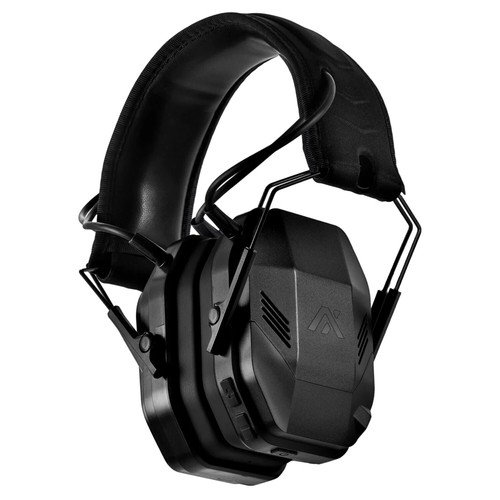
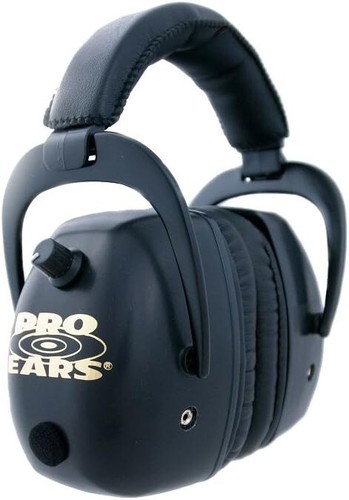
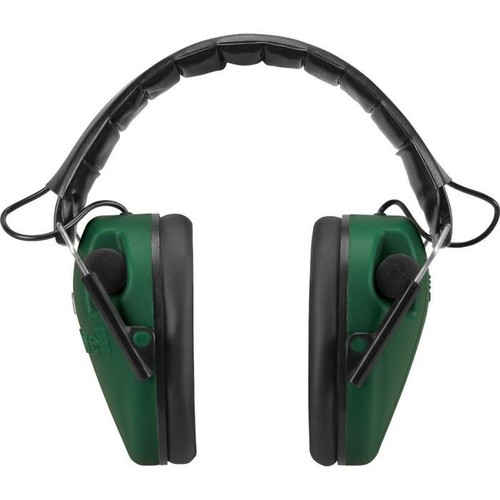
Howard Leight Impact Sport Electronic Shooting Earmuffs – Black
NIOSH researchers write that peak sound pressure levels from firearms run from a low of about 144 dB for a small-caliber rifle to as high as 172 dB for a .357 revolver, and that NIOSH recommends keeping peak impulse noise below 140 dB. In their test of a 12-gauge shotgun, a standard passive earmuff cut the peak from 161 dB to 130 dB, a 31 dB reduction. That was one muff on one gun in one test, so treat it as an illustration, not a promise for every muff on every course. NIOSH also says that ringing in the ears and a feeling of fullness after unprotected or under-protected shooting are signs that you need better protection next time.
Reading the NRR
What it is. The Noise Reduction Rating is the number in decibels printed on hearing protectors sold in the U.S. The USCCA explains that the EPA requires every hearing protector sold in the U.S. to carry an NRR label, and that a higher number means a greater potential for noise reduction.
What it isn't. The EPA's labeling rule says the NRR is based on continuous noise and may not be an accurate indicator of the protection you get against impulse noise such as gunfire. NIOSH researchers add that for a typical passive protector the NRR seems to be a lower bound for how much it reduces impulse noise.
Real life is lower than the label. The USCCA says the potential depends on wearing the protector properly and is generally less under real-world conditions.
On this page. A card shows an NRR only when the seller's listing title or item details state one, and then it is labeled as the seller's own claim. Clays Finder has not tested any product, so a missing rating just means the listing didn't give one.
Muffs, plugs, passive and electronic
The USCCA sorts hearing protection into two shapes (muffs and in-ear) and two kinds (passive and electronic). Here is how the four common choices compare, using what NIOSH, the USCCA and Shooting Illustrated (a journal of the NRA) say.
Type
What it does
Worth knowing
Passive muffs
Block noise with a physical barrier over the ear.
NIOSH measured 20 to 38 dB of peak reduction from standard earmuffs. They block range commands along with everything else.
Electronic muffs
A microphone and amplifier let you hear quiet sounds; the amplifier cuts back when sound gets loud.
They need batteries, and Shooting Illustrated notes that with dead batteries you have a pair of muffs that block noise but no longer let you hear as well. See below.
Foam plugs
A disposable plug worn in the ear canal.
NIOSH measured 10 to 30 dB of peak reduction from earplugs. The USCCA says all disposable plugs are full-block. NIOSH's best combination uses a deeply inserted foam plug.
Reusable or custom plugs
Plugs you can reuse, including pre-molded and custom-molded ones, some with a filter that lets safe sound through.
The USCCA says reusable plugs may be full-block or filtered. NIOSH noted in 2007 that there were no data yet on how well level-dependent plugs work.
The USCCA's own take: in-ear protection is more comfortable for long wear, while you can't beat muffs for convenience.
Electronic muffs, explained
NIOSH describes electronic level-dependent muffs this way: a microphone on the outside of the earcup feeds an amplifier and a speaker inside, so you hear your surroundings at a safe level, usually limited to under 85 dBA. When outside sound goes above that, the amplifier gives less gain and eventually shuts off, so you get the full passive protection of the cup. NIOSH tested several such muffs and found their amplifiers reacted fast enough to give the same protection as when they were switched off. That is NIOSH's finding for the muffs it tested, not a guarantee for every model, so read each maker's own claims. The practical benefit on a clays course is being able to hear the squad and the field judge without taking anything off.
Plugs under muffs
NIOSH recommends that hunters and shooters use double hearing protection every time a weapon is fired, meaning earplugs and earmuffs together, with a deeply inserted foam plug and a well-seated muff as the best pair. NIOSH says the combination can give as much as 50 dB of peak reduction. Two caveats from the same sources: the USCCA notes that two protectors together give less than the sum of their two NRRs, and NIOSH says two passive protectors can badly hurt your ability to communicate, while an electronic muff over a deeply inserted foam plug can make up for that.
Fit with glasses, a cap and a gun mount
Seal against your head. NIOSH says special care must be taken to make sure an earmuff stays sealed against the side of your head when you wear safety glasses.
Thin temples help. The NSSF says coaches suggest glasses with thin temples so they work with hearing protection, and it suggests trying glasses with your ear protection and a cap. See shooting glasses for clays.
Try it mounted. Bring your gun to your shoulder with the muffs and your glasses on and check that nothing pushes the cup away from your head. Trying a pair with your own gun and glasses tells you more than any listing.
What the rules say
The NSCA's rule book says all persons, including spectators, shooters, field judges and trap personnel, must wear eye and ear protection on the course at an NSCA-sanctioned tournament. It also says that Apple AirPods and similar earbuds are not adequate ear protection unless custom molded to provide hearing protection, and that earbuds specifically designed to offer hearing protection are acceptable. Each range sets its own rules for ordinary rounds, so ask when you call. See your first round of sporting clays.
Questions people ask
Do I need ear protection for my first round?
You need it. The NSCA requires ear protection on the course for everyone at its sanctioned shoots, and each range sets its own rules for casual rounds. Some ranges sell or rent it, so ask when you call. See your first round of sporting clays.
Can I use earbuds or AirPods?
The NSCA rule book says Apple AirPods and similar earbuds are not adequate ear protection unless custom molded to provide hearing protection. Earbuds specifically designed to offer hearing protection are acceptable.
What does NRR mean?
It stands for Noise Reduction Rating, the decibel number the EPA requires on hearing protectors sold in the U.S. A higher number means more potential reduction. The EPA's label rule says it is based on continuous noise and may not be an accurate indicator of protection against gunfire.
Is a higher NRR always better?
A higher NRR means a greater potential for noise reduction, but the USCCA says that potential depends on wearing the protector properly and is generally less in real-world use. A pair that seals well and that you will actually wear is the better pair.
Do I need electronic muffs?
No rule asks for them. NIOSH describes them as convenient for target practice because you can hear your surroundings at a safe level while the amplifier shuts off for loud sounds. Passive muffs and plugs also protect, and they have no batteries.
Can I wear plugs and muffs together?
NIOSH recommends it for hunters and shooters: a deeply inserted foam plug under a well-seated muff. The sound reduction is less than the two ratings added together, and two passive protectors make it hard to hear people, so NIOSH points to an electronic muff over the plug if you need to talk.
Will muffs work with my shooting glasses?
They can, but NIOSH says the muff has to stay sealed against your head with glasses on. Thin glasses temples help, and the NSSF suggests trying glasses with your ear protection and a cap before you buy. See shooting glasses for clays.
NSCA 2026 Rule Book (updated 4/22/26), "Mandatory Eye and Ear Protection" (Section II.A.2): nsca.nssa-nsca.org
W. J. Murphy, D. C. Byrne and J. R. Franks (NIOSH), "Firearms and Hearing Protection," The Hearing Review, March 2007 (peak levels, 140 dB guideline, double protection, level-dependent muffs, measured reductions): stacks.cdc.gov
NIOSH, "Comparison of the Performances of Three Acoustic Test Fixtures Using Impulse Peak Insertion Loss Measurements," EPHB Report 350-14a, Feb 2015 (quotes the EPA hearing protector label rule; NRR as a lower bound for impulse noise): cdc.gov
USCCA, "How to Choose Ear Protection for Shooting" (muffs and in-ear, passive and electronic, NRR, comfort): usconcealedcarry.com
Shooting Illustrated (an official journal of the NRA), "Electronic vs. Non-Electronic Hearing Protection" (batteries and what happens without them): shootingillustrated.com
National Shooting Sports Foundation (Let's Go Shooting), "How To Choose The Best Shooting Glasses For Sporting Clays, Trap & Skeet" (thin temples, trying glasses with ear protection and a cap): letsgoshooting.org

 Support Clays Finder