Clays Finder is a participant in the eBay Partner Network. If you follow a link to eBay on this page and make a qualifying purchase, we may earn a commission. Those links are paid links.
Photo: Fort Stewart Public Affairs, U.S. Army, September 24, 2009. Public domain. Wikimedia Commons
The short answer: you need some way to carry your shells, and that can be as simple as a belt pouch. A shooting vest costs more, but it also gives you a pad to mount your gun against, which is why the NSCA's chief instructor says he prefers a vest to a pouch. If you wear a vest, choose one that lets you move freely, has pockets that hold a full box, and has the pad on the shoulder you shoot from.
Why carry shells on you at all? Because you move from station to station. The NSSA, the skeet side of the same organization, lists "a shell holder you wear to carry your ammo as you move around the field" on its practice-round equipment checklist, and our first-round guide suggests a pouch or a vest pocket. Nothing on those lists requires a vest.
What to look for
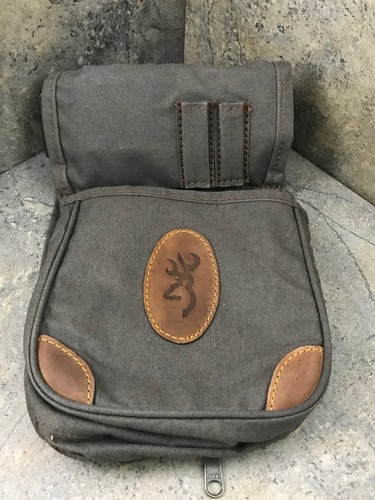
Vest or pouch. A pouch or shell holder carries shells while you move. A vest carries them in front pockets and usually adds a mounting pad. See vest or pouch.
Fit and movement. You should be able to swing and mount freely. See fit.
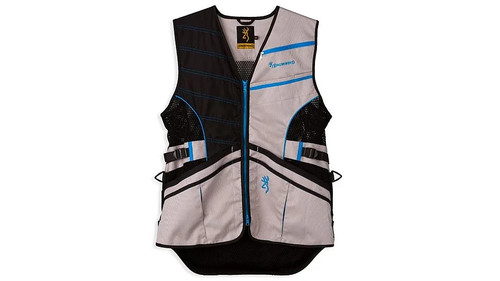
Pockets. Pocket depth and placement decide how easily you reach for shells. Split pockets help if you carry two kinds of shell. See what a clays vest has.
The gun-mount pad. It has to sit where your stock lands, and its material matters. See the mounting pad.
Breathable material. Mesh panels help in warm weather.
Right or left. Pads go on one shoulder, and listings often say "right hand" or "left hand". Check which one you need.
Shooting vests, shell pouches and shell bags on eBay
Prices as of Nov 21, 2026, 9:43 AM ET. New items only. Photos, titles, prices and seller names come from eBay's listing data. Clays Finder doesn't sell anything: you buy on eBay from the seller, and the price at eBay checkout is the one that counts. We say nothing about an item beyond what its listing says. eBay is a trademark of eBay Inc.
9 new shell bag and vest listings
Paid links. Every “View on eBay” button below is an eBay Partner Network affiliate link: if you buy after clicking, Clays Finder may earn a commission at no extra cost to you.
Beretta Uniform Pro 20.20 Evo Women's Shooting Mesh Vest Large
In the NSSA-NSCA's "Ask the Instructor" column (2018), Don Currie, then the NSCA's Chief Instructor and a Master Class competitor, answered this: overall he prefers shooting in a vest over a pouch because a vest gives a consistent surface to mount the shotgun against. That is one instructor's preference, and a pouch has its own appeal. It is simpler and it's all the NSSA's checklist asks for, a shell holder you wear. Either works for a first round.
What it is
What the sources say
Shell pouch or holder
A holder you wear that carries shells while you move around the field.
NSSA's practice-round checklist asks for "a shell holder you wear to carry your ammo as you move around the field." Our first-round guide lists a pouch as one way to carry shells.
Shooting vest
A vest with shell pockets, usually with a mounting pad on one shoulder.
The NSCA instructor says a vest gives a consistent surface for mounting the gun. Orvis says a clays vest keeps a few things handy while you walk a course or skeet field.
What a clays vest has
Orvis describes the features of a vest made for clays, as opposed to a game-bird hunting vest:
Mesh. Often mesh, which is lightweight and breathable. Orvis adds that it can't take the wear of hunting for long.
Length. It comes down lower in front and back, usually to mid-thigh, which makes it easier to reach for shells and to store spent hulls.
Pockets. A few lower front pockets that carry two or more boxes of shells. Orvis notes that they don't button up or zip shut. The NSCA instructor suggests split pockets, two sections in each front pocket, if you carry more than one kind of shell.
Chest pocket. For shooting glasses, ear plugs or choke tubes (Orvis). The NSCA instructor likes a breast pocket for a lens cloth.
Back pocket. Orvis mentions a pouch on the back for empty shells. The NSCA instructor says to look for a back pocket if you reload and want to slip your empties into it.
Extras. A clip on the back to display your number at a competition and a ring at the waist for a shooting towel (Orvis).
The gun-mount pad
Orvis describes a chest-level shooting pad on either the right or left side, which gives you a stable platform to mount your gun, and says some vests let you slip in extra recoil-absorbing material. The NSCA instructor strongly prefers a leather or imitation leather pad over cloth or suede, because it helps keep the gun butt from catching on the vest during the mount. He adds that if you mount toward the outside of your shoulder you may want a wider pad than standard, and that the pad and the upper edges of the front pockets are high-friction spots that are likely to wear out first.
Fit
Unrestricted movement. The NSCA instructor says a vest must let you move freely, and suggests testing it on crossing targets, overhead targets and targets below your feet.
Length and pockets. A vest that fits well in length will also tend to have the front pockets at the right height (same source).
Room for layers. He points out that a roomy vest with a drawstring is handy when you add winter clothes underneath.
Warm weather. If you shoot where it's hot, he suggests thinking about a mesh vest, since mesh panels let the vest breathe.
Left or right. Check the listing for "right hand" or "left hand" so the pad is on the shoulder where your stock lands.
What this page leaves out
Orvis says hunting vests are made to secure lots of gear and stand up to the abuse of the field, which is a different job from a clays vest. This page leaves out game-bird and blaze-orange hunting vests, tactical gear, children's items, and anything that is not a vest, shell pouch or shell bag. It also leaves out gun cases, slings and ammunition.
Questions people ask
Do I need a vest for my first round?
No. The NSSA's practice-round checklist asks for a shell holder you wear, and our first-round guide says a pouch or a vest pocket will do. A vest is something you can add once you know you like the game.
Should I get a vest or a pouch?
The NSCA's chief instructor prefers a vest because it gives a consistent surface to mount the shotgun against. A pouch is simpler. If you're not sure, you can start with a pouch and move to a vest later if the pad appeals to you.
What is the pad on the shoulder for?
It gives you a stable platform to mount your gun. Orvis says it sits at chest level on the right or left, and that some vests let you slip in extra recoil-absorbing material.
What should the pad be made of?
The NSCA instructor prefers leather or imitation leather over cloth or suede because it helps avoid catching the gun butt on the vest during the mount.
Are mesh vests worth it?
Both the NSCA instructor and Orvis point to mesh as the lightweight, breathable choice for warm weather. Orvis adds that mesh can't withstand the wear of hunting for long.
Is a hunting vest the same thing?
No. Orvis says hunting vests are about securing lots of gear and standing up to the abuse of the field, while a clays vest keeps a few things handy as you walk a course. This page shows shooting vests, not game-bird or blaze-orange hunting vests.
What should I put in the pockets?
Shells for the round (one box of 25 for a standard round of skeet, per the NSSA) and, per Orvis, glasses, ear plugs or choke tubes in the chest pocket. For which shells you can put in them, see the shot size and shell rules guide.
NSSA-NSCA Target Talk, "Ask the Instructor: Shooting Vests" (by Don Currie, identified there as the NSCA's Chief Instructor), April 18, 2018: nssa-nsca.org
Orvis, "What Are Bird Hunting & Clays Shooting Vests?" (features of clays vests versus hunting vests): orvis.com
NSSA, "Skeet Basics" (practice-round equipment checklist, including a shell holder): mynssa.nssa-nsca.org

 Support Clays Finder